Comparative Analysis: Jaggery vs Jaggery Powder vs Raw Sugar
A comprehensive comparison of the three natural sweeteners, their health benefits, nutritional profiles, and best uses based on scientific research.
Share this article by copying the URL from your browser.
Key Takeaways for Comparative Analysis: Jaggery vs Jaggery Powder vs Raw Sugar
- ✓A comprehensive comparison of the three natural sweeteners, their health benefits, nutritional profiles, and best uses based on scientific research.
- ✓Based on scientific research and traditional knowledge
- ✓Read time: 13 min read
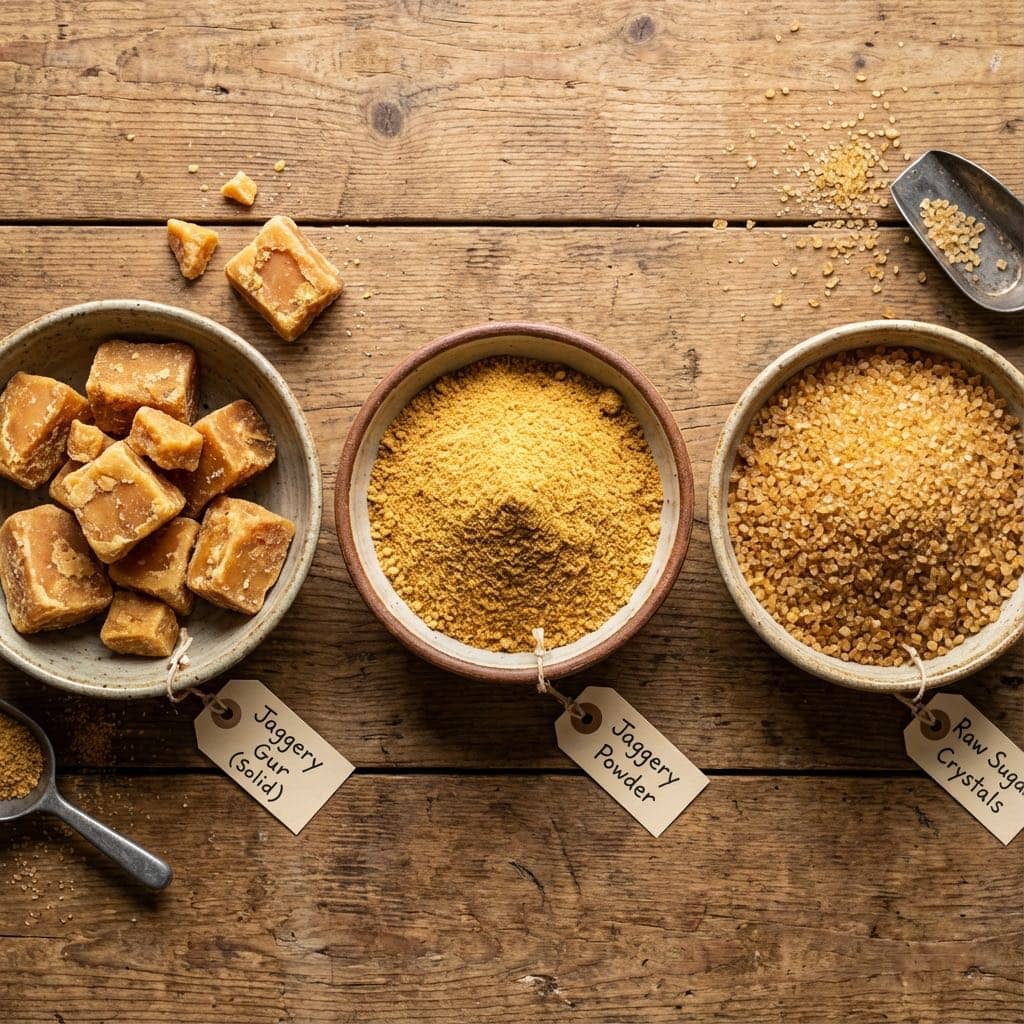
When choosing a natural sweetener, understanding the differences between jaggery, jaggery powder, and raw sugar is essential. This comprehensive analysis compares these three products based on nutritional content, health benefits, and practical applications, all backed by scientific research.
Nutritional Comparison
All three products originate from sugarcane but differ in processing and form. Jaggery (solid blocks) and jaggery powder are essentially the same product in different forms, with identical nutritional profiles. According to research published in the Journal of Food Science and Technology, both contain approximately 11mg of iron, 70-90mg of magnesium, 1050mg of potassium, and 40-100mg of calcium per 100g. Raw sugar, being more processed, contains lower amounts: approximately 1.9mg iron, 29mg magnesium, 133mg potassium, and 85mg calcium per 100g.
Processing Methods
Jaggery undergoes minimal processing - sugarcane juice is simply boiled and molded into blocks or ground into powder. Raw sugar involves crystallization and some refining, removing more of the natural molasses. This difference in processing directly impacts nutrient retention, with jaggery retaining significantly more minerals and antioxidants.
Glycemic Index
Research shows that jaggery and jaggery powder have a glycemic index of approximately 84.7, while raw sugar has a glycemic index of around 65. However, the complex carbohydrate structure of jaggery means it provides more sustained energy release despite the higher GI. Raw sugar, while having a lower GI, still causes rapid blood sugar spikes similar to white sugar.
Antioxidant Content
Studies published in the Journal of Agricultural and Food Chemistry demonstrate that jaggery contains significantly higher levels of antioxidants compared to raw sugar. The minimal processing of jaggery preserves polyphenols, flavonoids, and other antioxidant compounds that are largely removed during raw sugar production. This makes jaggery superior for combating oxidative stress and reducing inflammation.
Digestive Benefits
Both forms of jaggery offer superior digestive benefits compared to raw sugar. Research indicates that jaggery activates digestive enzymes and helps prevent constipation. The natural fibers and minerals in jaggery support gut health in ways that raw sugar cannot match. Raw sugar, being more refined, lacks these digestive-supporting properties.
Anemia Prevention
The iron content in jaggery (11mg per 100g) is nearly 6 times higher than in raw sugar (1.9mg per 100g). This makes jaggery significantly more effective for preventing and treating iron deficiency anemia. For individuals at risk of anemia, jaggery is clearly the superior choice.
Practical Applications
Jaggery powder offers the convenience of instant dissolution in beverages, making it ideal for daily tea and coffee. Solid jaggery is perfect for traditional cooking, especially in desserts like halwa and kheer. Raw sugar works well as a direct substitute for white sugar in recipes where you want a granular texture and neutral flavor.
Flavor Profile
Jaggery has a rich, caramel-like flavor with notes of molasses that enhance the taste of foods and beverages. Raw sugar has a milder, more neutral flavor that's closer to white sugar. The choice between them often comes down to personal preference and the specific recipe being prepared.
Cost and Availability
In Pakistan, jaggery is often more affordable than raw sugar, especially when sourced locally from Cholistan. The traditional production methods and local sourcing make jaggery an economically viable option for many families.
Health Recommendations
For maximum health benefits, jaggery (in either form) is the clear winner. Its superior mineral content, antioxidant properties, and digestive benefits make it the best choice for those seeking a healthy natural sweetener. Raw sugar is a good middle ground for those who prefer the texture and flavor of sugar but want a more natural option than white sugar.
Conclusion
While all three products are healthier alternatives to refined white sugar, jaggery stands out as the most nutritious option. The choice between jaggery powder and solid jaggery is primarily one of convenience and application. Raw sugar serves as a good transitional option for those moving away from white sugar. Regardless of choice, moderation remains key, as all are forms of sugar and should be consumed within recommended daily limits.
References & Further Reading
Explore Our Premium Pantry Collection
Discover clean-label essentials across sweeteners, spices, seeds, and wellness powders.
Shop ProductsRelated Articles
Jaggery (Gur): Comprehensive Health Benefits and Scientific Research
Discover the extensive health benefits of jaggery backed by scientific research. From iron deficiency to digestive health, learn why jaggery is a superior natural sweetener.

Traditional Jaggery Making in Cholistan: A Heritage of Health
Explore the traditional methods of jaggery production in Cholistan, Pakistan, and how these time-honored techniques preserve nutritional value and health benefits.